AFRICA IN THE MULTIPOLAR SYSTEM
Tiberio Graziani *
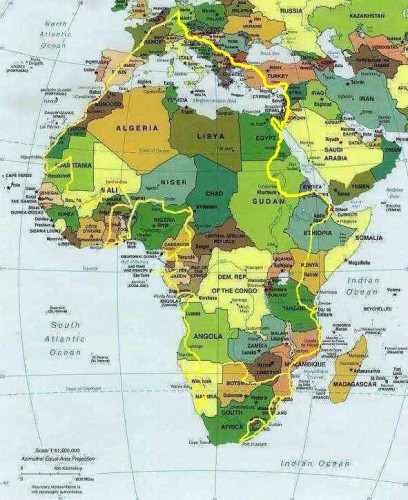
In the new multipolar structure, fully in the consolidation phase, Africa risks becoming, for economic and geostrategic reasons, the stakes between the western system, led by the US, and the Euro-Asiatic powers, Russia, China and India. In order to prevent and block that possibility, and especially to take on a decisive global in the medium and long term, the continental integration of Africa represents a need and a challenge which the African ruling classes are urgently called to answer. Such integration must probably be configured on a regional basis, following three principal lines: from the Mediterranean, from the Indian Ocean and from the Atlantic Ocean.
Multipolarism: a scenario undergoing consolidation
Multiple factors, including principally a) the US’s incapacity to manage the post-bipolar phase that arose after the Soviet collapse; b) the reaffirmation of Russia operated by Putin and consolidated by Medvedev; c) the economic growth and the new geopolitical weight of China and India, two nation-continents; d) the release of some important South American countries from the protection of Washington, have set preconditions for the constitution of a multipolar system.
The new geopolitical scenario, after a first gestational phase, continually undermined by Washington, London and European oligarchies led by Sarkozy and Merkel, now proves to be consolidating, thanks to the ongoing cooperation activities between Moscow, Beijing and New Delhi regarding large crucial themes, including: the supply and distribution of energy resources, continental security, solutions being adopted relative to the economic-financial crisis, the reinforcement of some institutions with multiregional, if not continental, value, such as the for Shanghai Cooperation Organization, realistic stances regarding various questions imposed by the US in the international debate, from Iran’s nuclear programme to human rights in China, Russia and Iran and ultimately also in India. (1). Beyond the process of Euro-Asiatic integration, it should be noted that the new international picture should be further consolidated by the effect of strategic agreements that some Euro-Asiatic countries (Russia, Iran and China) have reached with some important South American countries such as Brazil, Venezuela and Argentina, in economic matters and in some cases military ones as well.
In light of the considerations laid out above, there seem to be essentially two features that mark the new geopolitical picture:
a) one – relative to the constitution and the very existence of the new international order – seems to emerge from the synergy of aims that stimulate the biggest Euro-Asiatic countries and those of Indio-Latin America. The wishes of the élite managers of Moscow, Beijing, New Delhi, Teheran, and lately Ankara (2) converge with those of Brasilia, Caracas and Buenos Aires and tend to make themselves topical in geopolitical practices that foresee, through strategic relationships, the demotion of the from world power to regional power. At the end of the first decade of this century, Eurasia and Indio-Latin America (3) seem to make up the pillars on which the current international system rests. The entire multipolar wager will very probably be played in the medium and long term on the full integration, or better, the degree of internal cohesion of the two great continental masses.
b) the other feature, which in our opinion could concern the nature of the new geopolitical context, seems to consist in the continentalist articulation with which it tends to manifest itself. (4).
Against the consolidation of such a new scenario, it is however necessary to keep in mind that the western system led by North America, even if in a declining phase, or perhaps because it is in a declining phase, seems to accentuate, despite the rhetoric of the new administration, its own expansionist and aggressive nature. This not only will foster the current differences, but will create additional ones, which probably will be discharged in the most geopolitically and geostrategically fragile areas. Africa is one of these.
Africa’s fragility and the US’s penetration of the southern hemisphere
In this frame of reference, highly laden with tensions since, as shown above, determined by the confrontation between the new multipolar system in accelerated definition and that centred on the US, Africa finds it hard to find a clear position, that is, to imagine itself as a single geopolitical entity, even if a very complex one, apart from the deep and various cultural, ethnic, sectarian, climatic, economic and social differences that the entire continent shows (5).
Nevertheless, it was at the long-ago 1919 (so in another geopolitical context, also in transition, it’s worth stressing) conference of Paris, that the Africans expressed the need to unify their continent (6). Previously, the Panafrican movement, which arose in the US and in the Antilles at the end of the 19th c. from the ideas of the mixed-race American William Edward Burghardt Du Bois, bard of the “pan-negro” movement, and of the Jamaican Marcus Garvey, author of the watchword “back to Africa” and of the so-called “Black Zionism”, regarded mainly the cultural unity of the African peoples. On a purely political level the Panafrican movement contributed, during the decolonisation process, to the creation of the “Organization of African Unity”, today known as the “African Union.”
Today, after almost a century of inconclusive summits and conferences dedicated to continental unity (or integration) (what’s more, understood and theorised in different ways) the obstacles placed in the way of its creation seem to reside in the usual unresolved historical-political issues that include, among others, classic problems relative to the lack of infrastructure, political fragmentation in states modulated by the western paradigm (7), to the incapacity of the local ruling class to manage various tribalisms with a single and pro-continental, or at least regional logic, to the colonial heritage and, especially, to western appetites, further increased in the last few years, in virtue of African synergistic politics put into effect by the US and its regional ally, Israel (8). A quick and superficial reading of African events would convince an analyst to add, to US appetites, those of China, Russia and India. In that respect, one must also observe that Asian, or rather, Eurasian interests in Africa have a particular value and that the whole of Africa itself could benefit from them, since they would help Africa’s entry into the new multipolar system, and so would geopolitically anchor it to the Eurasian continent. Africa, in such a future scenario, would constitute the third pole of the Euro-Afro-Asiatic axis.
Washington, in the last year of the Bush administration, which was mired in middle-eastern conflicts (Iraq and Afghanistan); hampered by Russia and China in its march toward the Central Asian republics; lost the match, together with London and the European Union, in the Russian-Ukrainian dispute over gas; left downhearted by the Georgian venture (August 2008); found Turkish autonomy in the South Stream planning unbearable (9), intensified its foreign policy toward the southern part of the planet, in South America and in Africa.
In the two years 2007-2008 the US tried to disjoint the emerging Eurasian-Indio-Latin American geoeconomic axis BRIC (Brazil, Russia, India and China) and tried to undermine accords aimed at South American integration, putting pressure mainly on Brazil and Venezuela. In this strategy, which we can define as a “strategy to recover control of one’s former back garden” should be included, for example, the revival of the Fourth Fleet, as much as episodes such as that of the secessionist mottoes in the Bolivian crescent (departments of Tarija, Beni, Pando and Santa Cruz), orchestrated, according to a number of South American analysts, including the Brazilian Moniz Bandeira, by Washington. Such renewed interest by the US in control of South America, begun by the previous Republican administration, is likewise followed by the current one, led by the Democrat Obama, as demonstrated by two emblematic cases: that of US meddling in the Honduran coup d’etat, and, especially, that relative to the installation of military bases in Colombia.
The current US penetration in Africa is an obligatory path for three main reasons.
One regards the issue of energy. According to a study by some experts commissioned in 2000 by the National Intelligence Council, the US expects by 2015to be able to take advantage of at least 25% of the petroleum coming from Africa (10). The search for and control of sources of energy in Africa corresponds to two needs seen as priorities by Washington and by petroleum groups that direct and support energy policy (11). The first need obviously derives from strategies aimed at searching for sources of energy supply, diversified and as an alternative to those of the Middle East. The second, on the other hand, regards protecting the dominant role that the US acquired during the last century, in the control and distribution of world energy resources. This role is now undergoing a very critical phase, caused by recent and synergic policies put into effect by Russia, China and some South American countries in the energy sector. The antagonist of the US in Africa is, as noted, China. The People’s Republic of China, in the last decade, has reinforced and implemented relationships in Africa and made investments there, especially in infrastructure, what’s more, following a policy started during the Cold War period. China is interested not only in African petroleum, but also in gas (12) and in materials considered strategic for its development, such as coal, cobalt and copper. On the energy front, an example important for the consequences and relationships between the US and China, is given by the fundamental contributions China made to the Sudan for its petroleum exports. Sudan, as known, has been a petroleum exporter since 1999 thanks to Chinese help; this has brought Khartoum to the “particular” attention and care of Washington. Recently (27 October 2009), the White House formally renewed economic sanctions on Sudan because of human rights issues in Darfur.
The other reason that African policy is a US priority for the next decade is geopolitical and strategic order. In the midst of the current economic-financial crisis, Washington should, as a major global player, direct its efforts in maintaining its positions in global zones, penalty to pay, in the best outcome, a rapid reorganization in regional power, or in the worst, a disastrous collapse, difficult to overcome in the short term. Instead, in line with the traditional geopolitical expansion that has always marked its relations with other parts of the planet, Washington chose Africa with its ample space to manoeuvre, from which to relaunch its military weight on the global plane in order to contest the Asian powers for world supremacy. In this adventurous initiative Washington obviously involved all of Europe. The new US policy in Africa is due to the fact that the US now finds closed two of the routes formerly open to access the Eurasian space: central Europe and the near and middle East. The first route, after the wave of victorious colourful revolutions that had drawn the foreign countries near Russia (the so-called New Europe) into the geopolitical space dominated by Washington, it seems for now a difficult road to follow, since Moscow has raised its guard. The difficulties encountered by the US in the issue of the space shield are indicative of this. The second route is that delineated, for a number of years, by the so-called Great Middle East doctrine: total control of the Mediterranean sea, elimination of Iraq, military occupation of Afghanistan, penetration into the central Asian republics. But the application of this geopolitical doctrine has not produced the results that the Pentagon and Washington expected in a reasonably short time; on the contrary, it has been negative because of the lasting and exhausting Afghan conflict and the unresolved Iraqi question and especially by Moscow’s Eurasian policies, aimed at recovering prestige and importance in central Asia.
The third reason, ultimately, is preventative order. This is linked to the policies under which the US currently acts in the southern hemisphere, in order to nullify the south-south axis, undergoing laborious definition among many African and South American nations. The main heads of state in Indio-Latin America and in Africa have recently confirmed, during the September 2009 summit on Isla Margarita (Venezuela), the wish to proceed with the strategic plan for “south-south cooperation” between Africa and South America, begun in December 2008 in Abuja, Nigeria.
The penetration tools Washington has adopted to control African space are of three orders: military order, AFRICOM (13), that is, the Military Command of the US for Africa, created in 2007 and put into action the following year; economic-financial order (seen in the case of sanctions against Sudan and the interference of the International Monetary Fund and Word Bank in the relationship between the Democratic Republic of Congo and China) (14); and last, one relative to the communication strategy of which a good example is Obama’s speeches, already considered “historic”, in Cairo and Accra. On the military plane, it’s important to note that the US penetration seems to favour, as a bridgehead to neutralise Sudan and the Democratic Republic of Congo, the area made up of Tanzania, Burundi, Kenya, Uganda and Rwanda. It should be stressed that the total military control of eastern Africa constitutes and important piece of the US strategy for domination of the Indian Ocean.
Africa’s geopolitical lines for the 21st century
Despite the difficulties that now hamper its geopolitical unification, Africa, in order to safeguard its own resources and stay out of disputes between the US, China, and probably Russia and India – disputes that could be resolved on its own territory – needs to get organised, at least regionally, along three principal lines that pivots with the Mediterranean basin, the Indian Ocean, and the Atlantic Ocean.
The activation of economic and strategic cooperation policies, at least regarding security, between the countries of North Africa and of Europe, on the one hand and similarly with India (to that aim note the Delhi Declaration, drawn up in the course of Summit 2008 India-Africa) (15), on the other, besides making the African regions more interconnected, sets up the basis for a potential future unification of the continent along regional poles and entered in the broadest Euro-Afro-Asian context. Likewise, the Atlantic line, that is the pursuit of strategic south-south cooperation between Africa and Indo-Latin America, would foster, in this case, the cohesion of western African nations and would contribute to the unification of the continent. In particular, the development of the Atlantic line would reinforce the weight of Africa relative to Asia, and to China in the first place.
The desirable integration of Africa – realistically possible only if structured along regional poles – brings to mind the historical development, prior to the colonial period, of authentically African political formations, which, it’s worth remembering, followed a regional basis. (16).
* director of Eurasia. Rivista di studi geopolitici (Journal of geopolitical studies) – www.eurasia-rivista.org - direzione@eurasia-rivista.org
1. Regarding India and the violation of human rights, especially those relative to religion, see the India Chapter of the Annual Report of the United States Commission on International Religious Freedom, ( http://www.uscirf.gov/ ) and the interesting critical article by M. V. Kamath, US must stop meddling in India's internal problems, “The Free Press Journal”, 3 September 2009 ( http://www.freepressjournal.in/ ), which denounces the manipulation by Washington regarding human rights and civil liberties for evident geopolitical aims.
2. Regarding the erosion of relationships between Turkey under Erdogan and the West, see Soner Cagaptay, Is Turkey Leaving the West?, www.foreignaffairs.com, 26/10/2009 and the essay by Morton Abramowitz and Henri J. Barkey, Turkey’s Transformers, Foreign Affairs, November/December 2009.
3. Recently (17-18 October 2009) the 13 South American countries belonging to ALBA signed the treaty constituting the unified system of national compensation (SUCRE), whose objective is the substitution of the dollar for commercial exchange starting in 2010.
4. Tiberio Graziani, Il tempo dei continenti e la destabilizzazione del pianeta, Eurasia. Rivista di studi geopolitici (Italian Journal of geopolitical studies), n. 2, 2008.
5. For a review of the issues that impede African integration and the factors the lack of homogeneity, see Géopolitique de l’Afrique et du Moyen-Orient, a work coordinated by Vincent Thébault, Nathan, Paris 2006, pp.69-220.
6. Nineteen years before, in July 1900, a first Pan-African meeting had taken place in London, dedicated, however, to the unity of Africans and their descendents in the Americas.
7. Africa is divided into 53 states and in two Spanish enclaves (Ceuta and Melilla), to which should be added the self-proclaimed states of El Ayun (western Sahara) and Hargeisa (Somaliland).
8. For recent Israeli policy in Africa, see Nicolas Michel, Le grand retour de Israël en Afrique, Jeune Afrique (http://www.jeuneafrique.com ), 3/9/2009; Philippe Perdrix, F. Pompey, P.F. Naudé, Israël et l’Afrique : le business avant tout, Jeune Afrique (http://www.jeuneafrique.com ), 3/9/2009; René Naba, Israël en Afrique, à la quête d’un paradis perdu, http://www.renenaba.com/ , 10/10/2009.
9. On 6 August 2009, Putin and Erdogan signed an agreement that foresees the passage in Turkish territorial waters of the Russian gas pipeline, rival of the Nabucco project supported by the US and European Union.
10. The study quoted, Global Trends 2015. A dialogue about the Future with Nongovernment Experts, December 2000, can be accessed at the government site of the Office of the Director of National Intelligence, www.dni.gov/
11. African Oil: A Priority for U. S. National Security And African Development, Proceedings of an Institute Symposium, The Institute for Advanced Strategic and Political Studies, Research Papers in Strategy, May 2002, 14. The document can be accessed at the site: http://www.israeleconomy.org/.
12. “The African continent possesses enormous natural gas reserves estimated at 14.56 trillion cubic metres, or 7. 9% of the world total. Verified reserves in Nigeria and Algeria (5.22 and 4.5 trillion cubic respectively) are less than those of Russia (43.3 trillion cubic metres), Iran (29.61), Qatar (25.46), Turkmenistan (7.94), Saudi Arabia (7.57) and the United Arab Emirates (6.43), but greater than those of Norway (2.91), which is one of the key gas-exporting countries. Still, levels of natural gas production and consumption in Africa are fairly low. Gas production in 2008 was 214.8 billion cubic metres, or 7% of the world total (an increase of 4.85 over 2007). South America has been the only continent to produce less natural gas in the same year. The consumption of natural gas in 2008 in Africa was 94.9 billion cubic metres or 3.1% of the world total (an increase of 6.1% over 2007), which is the lowest level on the world scale. Besides, 50% of natural gas produced in Africa – 115.6 billion cubic metres – is exported, mostly as liquefied natural gas (62.18 billion cubic metres). The share of African countries (Algeria, Nigeria, Egypt, Libya, Equatorial Guinea and Mozambique) in the global supply of gas is 14.2%, but the same level of liquefied natural gas is much higher – 27.5%.”, Roman Tomberg, Le prospettive di Gazprom in Africa, www.eurasia-rivista.org, 16 October 2009.
13. The militarization process in Africa by Washington has intensified further. See Kevin J. Kelley, Uganda: grande esercitazione militare degli USA nella regione settentrionale, www.eurasia-rivista.org, 14 October 2009.
14. Renaud Viviene et alii, L’ipocrita ingerenza del FMI e della Banca mondiale nella Repubblica democratica del Congo, www.eurasia-rivista.org , 19 ottobre 2009.
15. The text of the Delhi Declaration can be found at: http://www.africa-union.org.
16. Regarding the “regionalist” character of Africa, note the French Africanist Bernard Lugan in the introduction to his ponderous Histoire de l’Afrique, Ellipses, Paris 2009, p.3.: « Le longue déroule de l’histoire du continent africain est rythmé par plusieurs mutations ou rupture qui se produisirent selon une périodisation différente de celle de l’histoire européenne. De plus, alors qu’en Europe les grand phénomènes historiques ou civilisationnels furent continentaux, dans les Afriques, ils eurent des conséquences régionales, sauf dans le cas de la colonisation ».




 del.icio.us
 Digg
Digg Facebook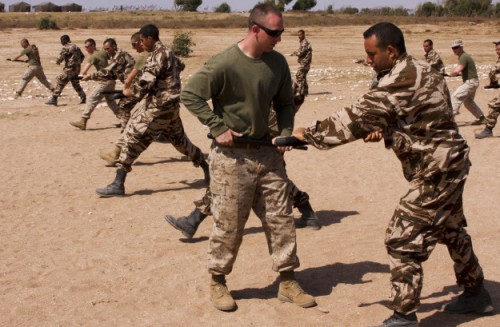


 Zuma scheint zuversichtlich, dass seine Lobbyarbeit erfolgreich sein wird, und er den angestrebten Sprung in den Kreis der BRIC-Staaten schafft. Ein wenig überrascht ist man über das beharrliche Ansinnen des südafrikanischen Präsidenten an einigen Orten aber schon. Denn letztendlich bedarf es einer Aufnahme unter der


 Pendant longtemps le Grand Electeur Frédéric-Guillaume de Prusse n’a connu aucun succès dans ses ambitions d’outre-mer. L’entreprise, qui a consisté à mettre sur pied une société à l’image de la Compagnie néerlandaise des Indes orientales, a échoué face aux réticences anglaises.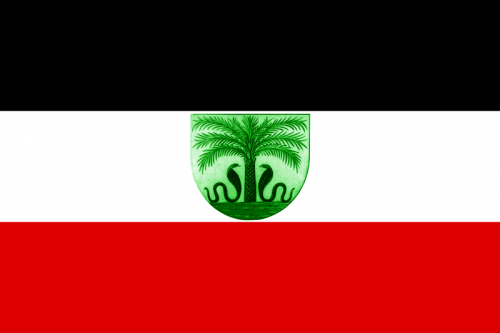
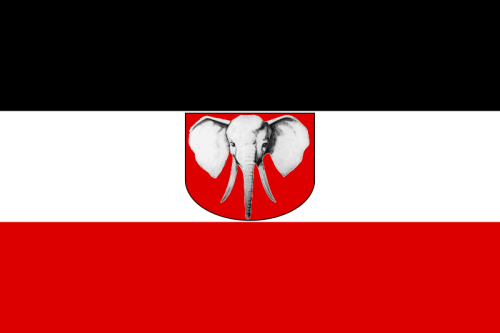
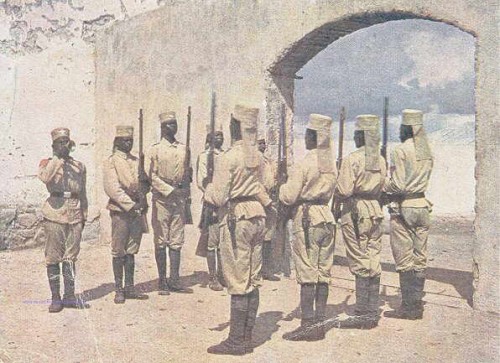 La troupe de protection allemande fut rapidement coupée de toute voie d’approvisionnement et, devant des forces ennemies supérieures en nombre, est obligée de se replier progressivement sur les hauts plateaux du pays, autour de l’actuelle capitale Yaoundé. Les combats acharnés durent jusqu’au début de l’année 1916. A ce moment-là, Allemands et Camerounais n’ont plus de munitions. Les Askaris de l’Empereur Guillaume II engagent le combat contre l’ennemi uniquement avec leurs baïonnettes. A la mi-février, le gros de la troupe de protection gagne un territoire neutre, la colonie espagnole de Rio Muni au Sud du Cameroun. Des dizaines de milliers d’indigènes, fidèles au Reich allemand, les suivent dans cet exil. Dans le Nord du protectorat du Cameroun, à proximité du Lac Tchad, la forteresse de montagne de Maroua tient sans fléchir sous les ordres du capitaine von Raben, grièvement blessé.
 L’Afrique du Sud n’est pas LA « Nation arc en ciel » dans laquelle les déterminismes raciaux ont disparu par un coup de baguette magique, mais l’assemblage de plusieurs peuples réunis par le colonisateur britannique à la suite de nombreuses guerres.